


Best Cloud Computing Services For Small Businesses – Cloud computing has evolved into a large and complex ecosystem of technologies, products and services. Creating a multi-billion dollar economy with many cloud providers competing for a growing share of the cloud market.
As a customer, it became very difficult to navigate and understand the cloud ecosystem. Outside of the business community—Amazon Web Services, Microsoft Azure, and Google Cloud Platform—the cloud market remains a mystery to many.
Best Cloud Computing Services For Small Businesses


Today we take a close look at the cloud market. We explain the different cloud services, identify the leading cloud providers, and analyze their cloud market share.
Top Cloud Companies To Know 2023
We also help you understand how and why businesses move to the cloud, and the relative benefits and costs involved.
Before analyzing the cloud market and cloud market share, you must first understand the three main types of cloud computing. Each type has its own dedicated service and services until the market is established. There are three main types of cloud computing:
IaaS is a cloud computing offering where a company gives you on-demand access to computing resources such as the web, storage and servers. In the server infrastructure, you can manage your own platforms and applications. This provides a flexible technology resource that can be adapted to your storage and processing needs.
PaaS is a cloud computing offering in which the service provider provides access to a cloud environment to develop, manage and operate applications. Through the platform, you will have access to a number of tools to support testing and development.
How Cloud Computing Can Benefit Your Small Business
SaaS is a cloud-based computing offering where the service provider provides access to its cloud-based software. Instead of installing the software on your local machine, you use the company’s application over the web or through an API.
You store and analyze your own data through the application. You don’t have to spend time installing, managing or updating the software, it’s all handled by the company.
You can host your own data center or intranet in the private cloud. You own, manage, upgrade and develop your own cloud ecosystem of server, network, software or infrastructure resources. Protect all this with your own firewall and security solutions.


In the public cloud, the company provides access to their data center. They are responsible for all administration, maintenance, security and development.
What Are The Benefits Of Cloud Computing?
A hybrid cloud is where you choose a mix of public and private cloud solutions. You are responsible for managing the interaction between the two services, in particular the security of data transfers between public and nested entities. Private cloud.
The cloud computing market is huge. New data from Synergy Research Group for seven major cloud services and enterprise market segments, providers and customers, reported more than $150 billion in revenue in the first half of 2019. This is a 24% increase compared to the previous year.
Like most of the cloud market, there is plenty of room for expansion. Especially when you consider that Gartner expects global IT spending to reach $3.79 trillion in 2019.
Analyzing the areas that make up the cloud market, public cloud solutions make up the majority. This is consistent with RightScale’s 2019 State of Cloud report. Accordingly, 91% of enterprises use a public cloud service, 72% chose a dedicated cloud solution, and 69% chose a hybrid solution.
Automate Your Work With Leading Cloud Services For Startups
IDC estimates that worldwide spending on public cloud services and infrastructure will double over the next five years. This is not surprising when you consider the many benefits of cloud computing. It has grown from a pace of $229 billion in 2019 to nearly $500 billion by 2023. As a result of the five-year compound annual growth rate (CAGR).
IDC’s report confirms that SaaS is the largest segment of spending, accounting for more than half of government spending over the forecast period. IaaS is reported to be the second largest spending segment and the fastest growing with a five-year CAGR of 32.0%. PaaS is the lowest-spending segment with the second-highest five-year CAGR of 29.9%.
For more detailed information on the public cloud market, we refer to other studies and reports.


Software as a Service is the oldest public cloud market with healthy growth. The latest data from Synergy Research Group reports software vendors with revenues exceeding $23 billion in the first quarter of 2019.
Best Cloud Solutions For Small Business
Put the market at more than $100 billion annually. The report confirms year-over-year growth of almost 30%, which closely aligns with IDC’s previously mentioned Worldwide Cloud Services Spending Guide.
The SaaS market is dominated by five main vendors. Together, these SaaS providers represent 51% of the global SaaS cloud market.
Microsoft leads the way with a 17% market share and 34% annual growth. Microsoft continues to increase its market share thanks to its dominance in the high-end collaboration segment.
Salesforce is next with a 12% SaaS market share and 21% annual growth. It is followed by Adobe with a 10% SaaS market share and 29% annual growth. Next comes SAP, which rounds out the top vendors thanks to a 6% SaaS market share and 39% year-over-year growth, the highest of the five vendors. Last is Oracle, which also has a 6% market share and reports annual growth of 29%.
Fascinating Cloud Computing Statistics For 2023
The other ten vendors represent another 26% of the SaaS market, with a growth rate of 26%. Such customers include Cisco, Google, IBM, ServiceNow and Workday.
Despite the maturity of the SaaS market, there is still plenty of room for expansion. Because the SaaS market currently accounts for only 20% of total software costs. As the majority of enterprise spending continues to focus on software solutions, SaaS vendors are turning to this market to drive business to a cloud-based environment.
In 2019, the SaaS market is largely divided into three camps – enterprise customers, cloud providers, and large IT vendors looking to expand into the market:

This camp includes big names like Microsoft, SAP, Oracle and IBM. They have a large base of existing on-site customers that they want to convert to four sales models. SaaS platform.
Cloud Computing Models
These new companies are experiencing rapid expansion and rapid growth. Examples include Zendesk, Workday, and Atlassian. But what they don’t have is the huge popularity of Microsoft in this world.
This group includes Google and Cisco, which play a role in the SaaS market. They are making a name for themselves in the market with services such as Google Workspace and Cisco’s collaboration applications.
When it comes to getting an accurate picture of the IaaS and PaaS market, things get a little complicated. Leading vendors in this space, including Amazon and Microsoft, often report combined IaaS and PaaS revenue.
Add to that the ambiguity of their news coverage, and it’s easy to see why it’s so difficult to get a true picture of the market. Fortunately, reports from leading research agencies such as Gartner and IDC provide a deeper understanding.
Aws Vs Azure Vs Google Cloud
Gartner’s latest data on the global infrastructure-as-a-service market shows annual revenue of $32.4 billion. This represents a 31.3% increase from 2017’s $24.7 billion.
According to Gartner, the market is dominated by five vendors, accounting for nearly 80% of the global IaaS cloud market in 2018. These vendors are Amazon (47.8%), Microsoft (15.5%), Alibaba (7.7%), Google (4.0%). ). %) and IBM (1.8%).
Let’s take a closer look at the 5 most popular public cloud providers of 2019. Combining data from Gartner and service revenue reports.
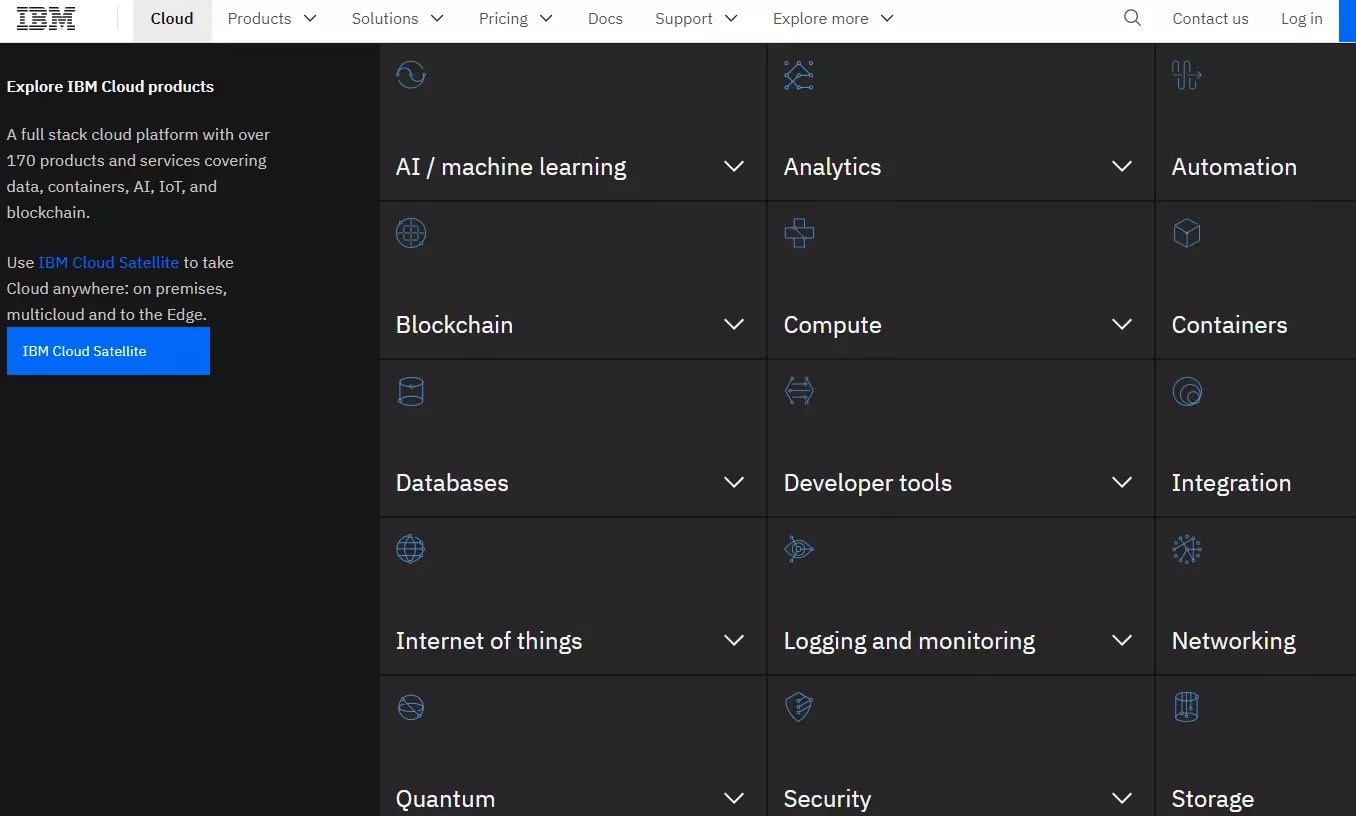

With almost half of the world’s public cloud market, Amazon is clearly the market leader. In 2018, Amazon reported $15.4 billion in revenue, a 26.8% increase over the previous year. Carrying this management forward into 2019, Amazon reported total AWS revenue of $16.1 billion in the first and second quarters, a 39% increase over the first half of 2018.
The Basics Of Cloud Computing Services For Businesses By Ontraq Ltd
With a 15.5% market share, Gartner estimates Azure’s annual revenue at $5 billion, with 60.9% growth in 2018, which will increase Azure’s market share. However, getting a true picture of Microsoft’s public market share remains a mystery. Because Microsoft continues to cover Azure revenues in a combined “business cloud”.
In 2019, Microsoft appears poised to capture AWS market share, reporting a 70% increase in Azure revenue in the first half of the year. Overall, Microsoft’s Q1 and Q2 cloud business revenue totaled $20.6 billion, a 40% increase over the first half of 2018.
Alibaba, which owns 7.7% of the public cloud market, has annual revenue of $2.49 billion with a growth rate of 92.6% in 2018, according to Gartner. $2.2 billion in total revenue, an increase of 66%. This brings the company’s revenue to over $4 billion.
According to Gartner’s forecast, Google’s cloud platform will gain a 4% share of the public cloud market, with annual revenue of $1.3 billion and 60% growth in 2018. This year, Google may take on Alibaba, and Google CEO Sundar Pichai will report on the cloud. income from services. for $8 billion. This should be taken a
Introduction To Cloud Computing: Information Upload Types And Outline Diagram
Businesses that use cloud computing, cloud computing benefits for businesses, cloud services for small businesses, cloud computing for businesses, enterprise cloud computing services, applications for businesses in cloud computing, cloud computing security services, cloud computing for small and medium businesses, what businesses use cloud computing, cloud computing for small businesses, private cloud computing services, businesses using cloud computing


