
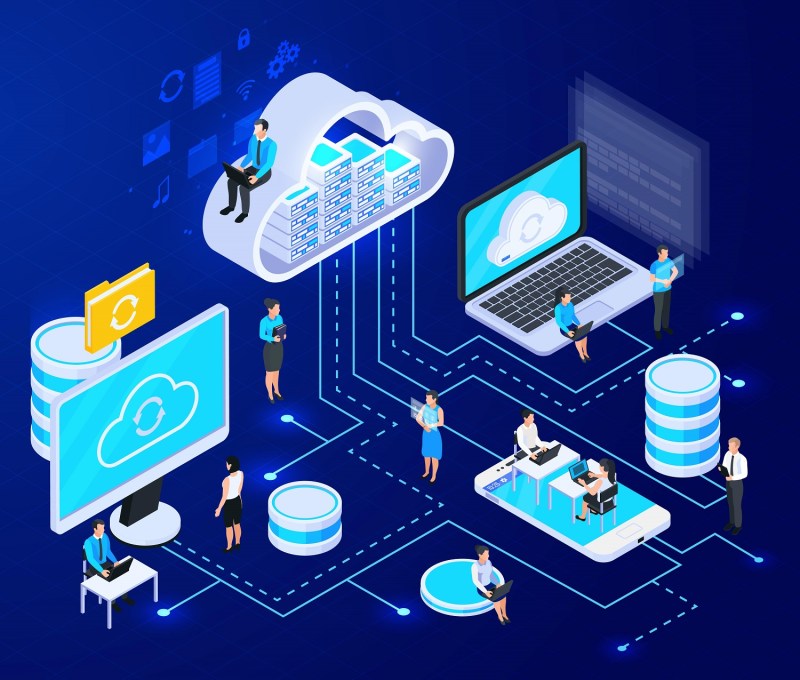
The Benefits And Challenges Of Cloud Computing For Small Businesses – In recent years, cloud computing has become a game changer for organizations around the world. The benefits of cloud migration are numerous, including increased speed and agility, scalability to meet changing business needs, improved cost efficiency, and enhanced security and compliance.
However, the journey to cloud migration also presents its fair share of challenges, such as managing complexity and risk, ensuring data privacy and security, achieving interoperability and compatibility, and maintaining a reliable Internet connection.
The Benefits And Challenges Of Cloud Computing For Small Businesses

So how do organizations successfully navigate the challenges and reap the benefits of cloud migration? The answer lies in a step-by-step approach that includes preparing for the journey, choosing the right cloud service provider, building a team and capabilities, and moving with the right strategies.
Benefits And Challenges Of Colocation In A Hybrid Cloud Architecture
Staying ahead of the curve in cloud computing means keeping up with new technology and trends, monitoring performance and continuous improvement, and having a vision of the future and what it means for your organization.
In conclusion, cloud migration offers great benefits to organizations but requires careful planning and execution to overcome challenges and achieve success. Now is the time to harness the power of cloud computing, and organizations that act now will be well positioned for a brighter future.
If you’re ready to learn more about cloud migration and how it can work for your organization, don’t hesitate to contact us. I am here to help and answer any questions you may have. If you want to get into the topic in more detail, be sure to check out my latest article https://medium.com/@saadmujeeb/the-rise-of-cloud-computing-navigating-the-benefits-and-challenges-a-seamless-migration-d007958918ee. Get ready to harness the power of cloud computing and put your organization on the path to success! Cloud Computing: The Benefits and Challenges of Moving Your Business to the Cloud March 28, 2023 532 views
Cloud computing has revolutionized the way businesses operate. By allowing access to computing resources over the Internet, the cloud has allowed businesses to become more agile, flexible, and cost-effective. In this article, we’ll explore the benefits and challenges of moving your business to the cloud.
Cloud Computing In Healthcare: Benefits And Challenges
Cloud computing refers to the distribution of computing resources over the Internet, including servers, storage, databases, software, and networks. Cloud computing provides businesses with a flexible and cost-effective way to access these resources on-demand.
Cloud computing allows businesses to increase or decrease their computing resources based on their changing needs. This means that companies can respond quickly to changes in demand, such as seasonal peaks or unexpected growth.
By leveraging cloud computing, businesses can avoid the high costs and maintenance associated with purchasing and managing their own hardware and infrastructure. This allows companies to reduce their capital costs and operating costs.

Cloud computing makes it easy for teams to collaborate and work together from anywhere in the world. With cloud-based tools and applications, teams can work on the same project in real-time, regardless of their location.
Economic Benefits And Challenges Of Cloud Computing
Cloud computing provides businesses with a secure and reliable backup and recovery solution. By storing data and applications in the cloud, businesses can quickly recover from disasters such as hardware failures, power outages, and natural disasters.
Although cloud computing offers many benefits, security is a major concern and challenge for businesses using this technology. Businesses must ensure that their data and applications are secure and protected from cyber threats. This requires implementing strong security measures such as data encryption, access controls and monitoring.
Businesses need to ensure compliance with data privacy regulations such as GDPR and CCPA. This requires implementing data protection measures such as data anonymization, data retention policies and access controls.
Companies with legacy systems can face challenges when integrating cloud-based applications. This requires careful planning and implementation to ensure that legacy systems can work seamlessly with cloud-based applications.
Pdf) Benefits And Challenges Of The Adoption Of Cloud Computing In Business
Businesses need to choose the right cloud service provider that can meet their specific needs. This requires evaluating the provider’s reliability, scalability, security, and profitability.
Technologies is a leading cloud service provider helping businesses move seamlessly to the cloud. With a team of experienced professionals, Technologies provides reliable, secure and cost-effective cloud solutions that help businesses achieve their goals. Contact us today to learn more about how we can help your business move to the cloud.
Frequently Asked Questions 1. What is the difference between public, private and hybrid clouds? Public clouds are available from third-party providers and are accessible to many users. Private clouds are owned and used internally by a single organization. Hybrid clouds combine the two. 2. Is it safe to store sensitive data in the cloud? Yes, it is safe to store sensitive data in the cloud as long as the cloud provider implements adequate security measures such as encryption, access controls, and regular monitoring. 3. How do I choose the right cloud service provider for my business? When choosing a cloud service provider, it is important to evaluate its reliability, scalability, security and cost-effectiveness. It is also important to consider their history and customer reviews. 4. Will moving to the cloud save my business money? Moving to the cloud can save businesses money by reducing capital and operational costs. However, cost savings depend on the specific needs and usage of the business. 5. How long will it take to migrate to the cloud? The time required for migration to the cloud depends on the complexity of the migration, the amount of data to be migrated, and the availability of resources. A cloud service provider can provide an estimate based on specific business needs. 6. Can I still use existing software applications in the cloud? Yes, existing software applications can be used in the cloud with proper integration and configuration. However, some legacy systems may require modifications to work with cloud-based applications. Cloud computing is no longer just a buzzword – it’s an industry with a global market value of $371 billion (and growing). By 2025, the global cloud computing market will be worth more than $832 billion (researchandmarkets.com).

Former Google CEO Eric Schmidt coined the term “cloud computing” at a search engine strategies conference in 2006, and the industry has grown rapidly since then.
The Rise Of Cloud Computing: Navigating The Benefits And Challenges For A Seamless Migration
There are countless reasons why cloud computing is important to business for large-scale data storage and analysis, web-based service, infrastructure scaling, or data retrieval purposes.
90% of organizations are already in the cloud in some capacity (451 research) – the point here is not that you need to be in the cloud, but how the evolution of the cloud will spur the expansion of your business.
Below are nine of the most relevant reasons why cloud computing will matter to business in 2021 (and beyond).
One of the key benefits of cloud computing is its inherent scalability. For example, an IT solution that can be easily (and quickly) scaled is one that can have an immediate and far-reaching impact on the business.
Pdf] The Effect Of Cloud Computing On Effectiveness Of Customer Relation Management In Electronic Banking Industry: A Case Study Of Eghtesad Novin Bank
Scaling an environment on demand was not possible in the past – organizations were limited by the size and processing power of their hardware setup.
With the cloud, this limitation is gone. The cloud has truly revolutionized the way businesses can manage technology resources.
Innovation is directly related to business growth. The use of legacy technologies can hinder an organization’s ability to test new solutions and actually implement these solutions at a scalable level.

Using the cloud as an infrastructure for innovation can lead to better performance, lower costs and greater agility. For example, in the world of IoT product development, companies are innovating at a pace that is only possible through the use of cloud computing.
The Challenges Of Healthcare It And Cloud Computing By Onviqa Pvt. Ltd.
Cloud computing has enabled the IoT industry to innovate, create and launch world-changing new products – and this applies to the entire technology ecosystem.
Cost efficiency is one of the main reasons why cloud computing is important for business. While cloud migration can be expensive, the right way to approach the cost issue is not how much money you can save by migrating.
Instead, consider how much your organization currently spends on its IT services versus how much you’ll spend on the cloud.
Calculating the true cost of ownership of a cloud solution can be very difficult due to differences in project/solution requirements. Using a cloud partner for an approximate calculation is generally recommended.
What Is Cloud Migration? Benefits And Challenges By Softmaxai
The main benefit of DevOps is the increase in the quality and speed of implementing innovative solutions. This is achieved through a flexible communication process that allows traditionally isolated teams to work together throughout the development cycle.
The ability to add new features while maintaining consistency is the main reason many organizations have moved to the DevOps model.
If an organization is not using cloud computing with DevOps, they are missing out on a huge opportunity for faster product development processes, along with the obvious improvements to business operations that the cloud provides.

This improvement in the ability to roll out new features at a consistent pace (while maintaining application stability) is another key reason why cloud computing is important to business.
Benefits, 5 Challenges Of Cloud Computing In Higher Education
ക്ലൗഡിൽ നിന്ന് ബിസിനസ്സ് നേതാക്കൾക്കുള്ള പ്രധാന ആശങ്കകളിലൊന്ന്
Benefits of cloud computing services, cloud computing for small businesses, security challenges of cloud computing, cloud computing benefits for businesses, benefits of saas cloud computing, 5 benefits of cloud computing, benefits and challenges of cloud computing, challenges for cloud computing, best cloud computing services for small businesses, challenges of cloud computing, cloud computing for small and medium businesses, security benefits of cloud computing


