Security Challenges Of Cloud Computing – With 96% of companies reporting insufficient security for sensitive cloud data, cyber security concerns are no longer an afterthought.
The rise of cloud storage has enabled the most rapid digital transformation people have experienced since the pandemic began. Today’s global market of $83.41 billion is expected to explode to $376.37 billion by 2029.
Security Challenges Of Cloud Computing

Although cloud storage opens up many opportunities to simplify processes and productivity, we must also remember the complex risk it brings.
Pdf] Data Security Challenges And Its Solutions In Cloud Computing
These risks are less about the technology and more about the associated behaviors. As the number of services connecting to these cloud storages increases, so does the potential for security breaches.
Similarly, as remote work has become more common, many security leaders have expressed concern about the rise of insecure practices, such as storing files on personal and business clouds without permission or supervision.
Because cloud storage is already so closely associated with our personal and professional computing habits, it’s important to take cybersecurity risks seriously and have guidelines about using these services and company data.
Cloud storage service providers have built their businesses around their security measures. Most, if not all, popular cloud storage services have solid steps for their servers. And depending on package level or storage capacity, many merchants upgrade their solution with better encryption options.
Topic: Cloud Computing Security And Privacy: Challenges And Future Trends
In addition to traditional identity fraud, attackers now use the cloud to run fake third-party cloud applications, tricking users into giving them access to their real company data and resources.
As with most modern cybersecurity risks, the real danger lies in the interconnectedness of the technology world, and the greatest potential for cloud services to be compromised comes through APIs (programming application interfaces).
APIs allow different applications to connect and communicate over the Internet. In many ways, the security of your cloud is only as good as the security of the APIs you authorize for access.

Third-party APIs are ubiquitous and present a large attack surface. A compromised API can give a hacker a backdoor into your system through that “trusted” interface and overwhelm your entire technology system.
Most Common Security Challenges For Cloud Services
On average, end users in organizations with at least 500 users gave more than 440 third-party apps access to their Google data and apps. One organization has 12,300 different plugins accessing its cloud. And 44% of third-party APIs that access Google Drive can access sensitive data or all of a user’s account.
File-based malware also presents a serious threat to cloud computing. Cloud storage file sync functions make it easier for teams to collaborate on projects across devices and make systems less vulnerable to infected files.
Cloud storage providers typically sync files from local folders on your computer with files stored in the cloud. Downloading a malicious file to your local device can unknowingly provide access to your company’s cloud, where the file can infect the entire network.
Using an attack technique called “ransomcloud,” cybercriminals can lock up cloud-based data and applications and demand a ransom from the organization to regain access.
A Comparison Of Private Cloud Security & Public Cloud Security
Recent cyber security breaches highlight the risks involved in using cloud storage. Storage company Western Digital suffered a cyber attack in which hackers stole 10 terabytes of data, including customer information, the company’s code signing certificate, phone numbers of company executives, Western Digital files stored on PrivateArc Instant , and e-commerce data from the company’s SAP. back office.
The hackers used the data to demand a ransom of at least 8 figures and if they were not paid, the company risked the stolen data being published on the website of Alphv, a ransomware gang.
The use of personal and corporate cloud storage will only increase in the coming years, so you must implement a plan or regularly remind your users of the following actions:

To keep things manageable and secure, make sure all your users use only one cloud storage service that you control. Regardless of the service you choose, be there for your customers and make sure everyone uses what you choose.
Cloud Security Challenges
Fishing efforts continue to evolve and change. Private cloud storage is becoming an increasingly popular goal. Remind your users regularly not to click on links from unknown senders, even if it’s a Google Drive or Dropbox link.
Enabling two-factor authentication is the best way to prevent unauthorized connections. This is a great way to protect against users who don’t yet have good passwords, and it also protects against identity theft and phishing attacks.
Thousands of third-party applications connect to private data storage services. While services have adequate online security measures, software often comes from smaller companies that don’t have the same standards. Thankfully, all private data storage platforms have admin options that provide protection against insecure software.
Establish policies and guidelines for information classification and labeling, and inform users of their responsibility to handle data appropriately. For the most advanced protection methods, use data loss prevention technology for strategic and other sensitive data.

Top 11 Cloud Security Challenges
There are four major players in the cloud storage space: Google Drive, Dropbox, Microsoft’s OneDrive and Apple’s iCloud.
Even if you have already selected services in your company, it is important to update them all, so that you can be aware of the risks that may arise if your users sign up for different services at home.
Google is a leading player in the personal data storage game. Many users are already familiar with the platform, as it has a popular free version and integrates well with other services.

The fact that Google Drive is part of the larger Google ecosystem is both a blessing and a curse. It is easy for users to work and collaborate using this platform. However, the Google Drive breach gives cybercriminals access to email and even allows them to hijack a user’s Android phone.
Cloud Trends And Cybersecurity Challenges: Navigating The Future
Dropbox is the company that pioneered the concept of private cloud storage for the masses. They expanded their offering by introducing Dropbox Paper, a supercharged version of Google Docs that allows for all kinds of collaboration.
Dropbox focuses entirely on the consumer side of the business. However, they have moved to business customers in recent years and their management features will surprise you.
Everyone with a Windows license has a OneDrive account by default. It is likely to be familiar to many of your users and integrates well with Microsoft Office software and many other third-party applications.
OneDrive has the strongest security options of all the major players. It also has many administrative options that you can customize according to your needs. Unlike iCloud and Google, a breach only affects a user’s computer, so the impact on the ecosystem is easier to manage.
Big Data Security: Advantages, Challenges, And Best Practices
Like OneDrive, anyone with an Apple phone or computer has an iCloud account synced to their ID. iCloud doesn’t have many background control options, but there are almost no third-party software integrations available.
ICloud also has the same high risk as Google Drive, where an iCloud breach can easily lead to the control of a user’s phone.
Although cloud data storage is generally a safe option, it is important not to be complacent. With the rise of remote work and people interacting with many cloud services over unsecured networks, some of the biggest risks to cloud computing come from user behavior.
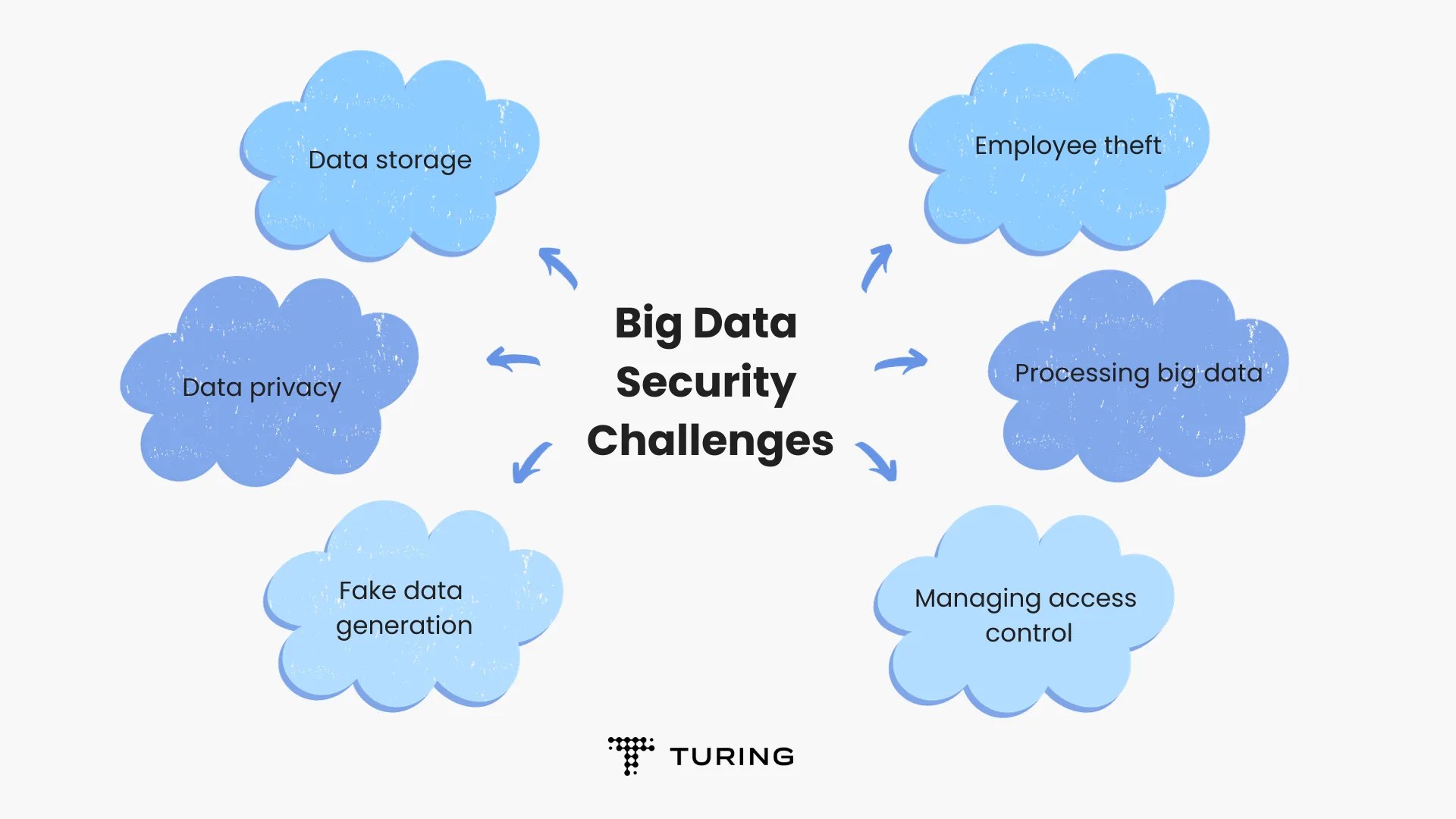
Managing these risks starts with having strong cloud security guidelines in place. Now more than ever, cyber security relies on good education rather than technology. Cloud computing got its name because it involves accessing information remotely, often referred to as “the cloud” or virtual space.
How Google Cloud Plans To Supercharge Security With Generative Ai
It eliminates the need for intensive data processing on individual devices and transfers the workload to large groups of computers in the cyberspace.
Essentially, the Internet becomes the cloud, enabling users to access their data, work and applications from any internet-connected device around the world.
Cloud computing offers many advantages in speed, efficiency and innovation. However, it also poses some security risks, especially when handling sensitive data such as medical records and financial information.
In simple terms, cloud computing refers to the provision of IT resources over the Internet based on user needs. The pricing structure under cloud computing follows a pay-as-you-go approach. It allows users to access multiple services such as computing power, storage and databases.
Cloud Security Statistics You Need To Know In 2023
Instead of purchasing and maintaining physical data centers and servers, users can access these resources as and when needed from a cloud provider.
Cloud-based storage allows users to store their data in a remote database without storing files on a local device or proprietary hard drive. As long as the electronic device has access to the Internet, it can access data and run related programs.
Bad security settings are responsible for a large portion of around 65% to 70% of all cloud security issues. When assets are not configured properly, they can be attacked.

Several factors contribute to this problem. Cloud infrastructure is designed to be user-friendly and facilitate easy business data exchange. However, ensuring that data is only available to authorized persons is a concern.
How Secure Is Cloud Storage?
Therefore, organizations using cloud-based infrastructure must meet the security standards provided by the service provider.
Cloud computing security challenges, cloud computing security issues and challenges, cloud computing management challenges, challenges facing cloud computing, mobile cloud computing challenges, challenges of cloud computing, iam challenges in cloud computing, security of cloud computing, challenges with cloud computing, benefits and challenges of cloud computing, challenges of mobile cloud computing, cloud computing security foundations and challenges pdf